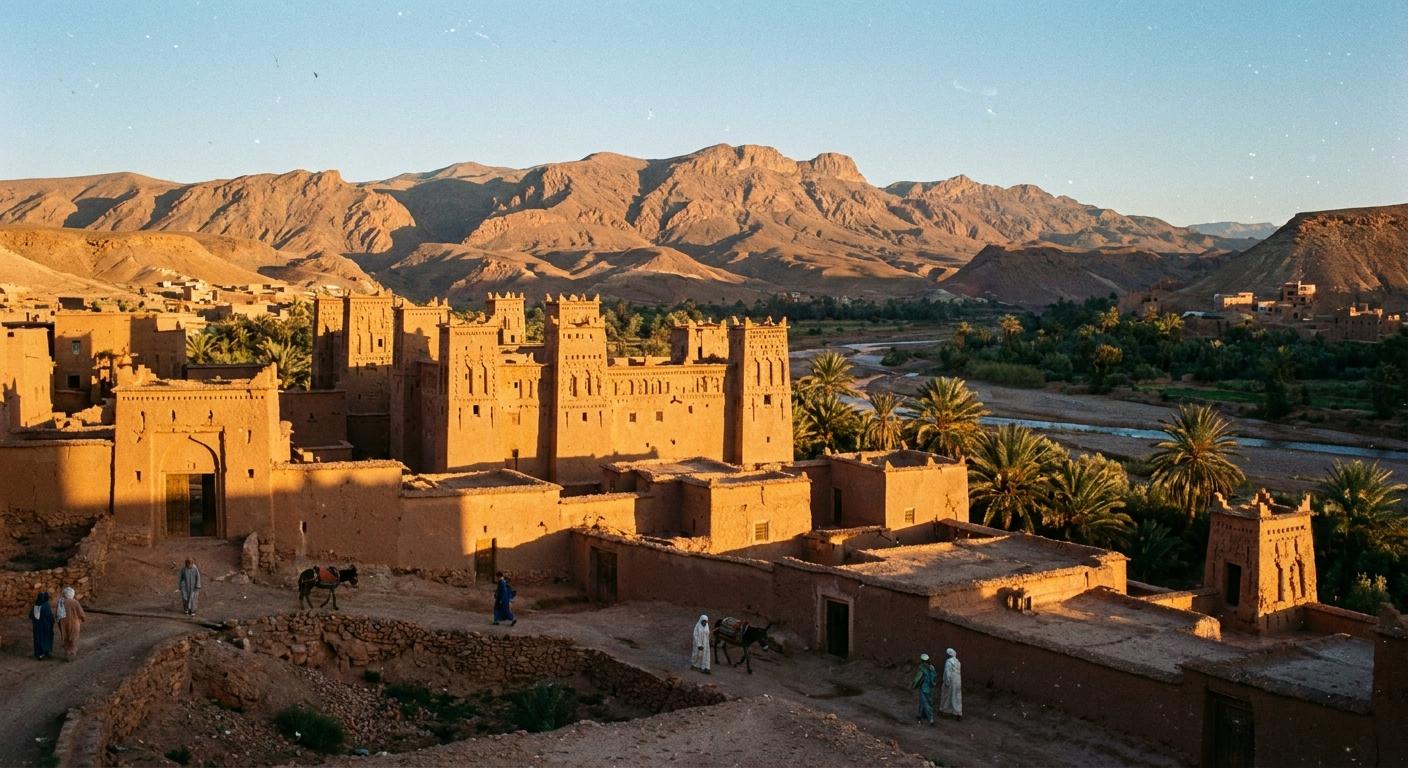
Aït Benhaddou
أيت بنحدو“UNESCO ksar rising from the Saharan earth — the most filmed location in Morocco.”
Recommended stay
1–2 days
Daily budget
$30 – $160
Best months
March, April
Effort level
Low
Overview
Aït Benhaddou is the greatest surviving example of southern Moroccan earthen architecture — a fortified ksar of six towers rising from a hill above the Ounila River, built entirely from pisé (rammed earth) and palm wood. A UNESCO World Heritage Site since 1987, it has been the backdrop for over 20 major films including Lawrence of Arabia, Gladiator, The Mummy, Game of Thrones and Babel. Eleven Berber families still live inside the ksar. The contrast between the ochre earthen towers and the deep blue sky of the pre-Saharan south is one of Morocco's defining images.
History
Aït Benhaddou was established around the 11th century as a stopping point on the caravan route between the Sahara and Marrakech — the ancient road that carried gold, salt, ivory and slaves northward. The ksar was built and expanded over several centuries by the Glaoui tribe, who dominated this region until independence. The Glaoui kaïd (lord) maintained a residence here as late as the 1950s. UNESCO inscription in 1987 brought international attention and film productions, which fund ongoing restoration of the earthen towers that require constant maintenance against rain erosion.
Culture & Traditions
The eleven families remaining inside the ksar maintain the ancient pisé construction tradition — the earthen towers must be replastered with mud and straw every few years after winter rains. The community hosts a moussem (religious festival) each spring drawing families from across the Ounila Valley. Traditional Berber silver jewellery from the Ouarzazate region — heavy fibulas, anklets and necklaces — is sold by resident artisans inside the ksar.
Must-See Sights
The Ksar Itself
Cross the river on foot (shallow in summer, stepping stones) and climb the six towers — each level reveals more extraordinary views. Allow 2 hours minimum.
Sunrise from the Opposite Bank
The best photography position is from the east bank at sunrise — the ksar glows amber-gold in the first light, before tour groups arrive after 9am.
Ounila Valley
The river valley stretching south and north of the ksar — dotted with smaller ksour and traditional Berber villages, excellent for walking.
Atlas Film Studios
The largest film studios in the world by land area, 30km north at Ouarzazate — sets from Gladiator, Game of Thrones and dozens of other productions are open to visitors.
Telouet Kasbah
The crumbling palace of the Glaoui lords, 50km north via a dramatic mountain road — one of Morocco's most spectacular ruins, rarely visited.
Food & Drink
Tagine Mrouzia
Sweet lamb tagine with honey, raisins and ras el hanout — a festive dish from the Drâa Valley, served at the ksar-side restaurants.
Mechoui
Whole spit-roasted lamb over open coals — prepared for groups and festivals, often available at the larger restaurants outside the ksar.
Saffron Tea
Hot tea infused with Taliouine saffron and sugar — served at every café around the ksar, warming in the cold mornings.
Fried Merguez with Khobz
Spiced lamb sausages grilled at the market stalls across the river — the standard quick lunch for workers and guides.
Insider Tips
- ✓Arrive before 8am for photography without crowds — tour buses from Marrakech and Ouarzazate arrive from 9am onwards.
- ✓Cross the river on the stepping stones, not the tourist footbridge — it puts you on the authentic approach path.
- ✓Hiring a local guide from the ksar families (ask at the entrance) gives access to occupied sections normally closed to tourists.
- ✓Stay overnight in one of the guesthouses opposite the ksar — watching the ksar glow at sunset and sunrise without day-trippers is transformative.
- ✓Summer is very hot (40°C+) — spring and autumn are ideal. The ksar is beautiful in winter rain too, with dramatic storm light.
Neighborhoods
Ksar (inside walls)
11 resident families, artisan workshops and ancient earthen architecture — the authentic living heart.
East Bank (Agdz Road)
Guesthouses, restaurants and craft shops opposite the ksar — best photography position.
Ounila Valley
The surrounding valley with smaller ksour and Berber farms — excellent for morning walks.
Getting There
30km from Ouarzazate by road — grand taxis run from Ouarzazate's main square (30 min). No direct public transport from Marrakech; most visitors come on day tours or with a rental car via the Tichka Pass. The road from Marrakech (200km via N9) is one of Morocco's great drives.
Photos
Aït BenhaddouLocation
Aït Benhaddou, Drâa-Tafilalet
31.0470°N, 7.1297°W
Budget Guide / Day
Best Time to Visit