Marrakech
مراكش“Electric energy of a thousand-year-old medina.”
Recommended stay
2–5 days
Daily budget
$40 – $300
Best months
March, April
Effort level
Moderate
Overview
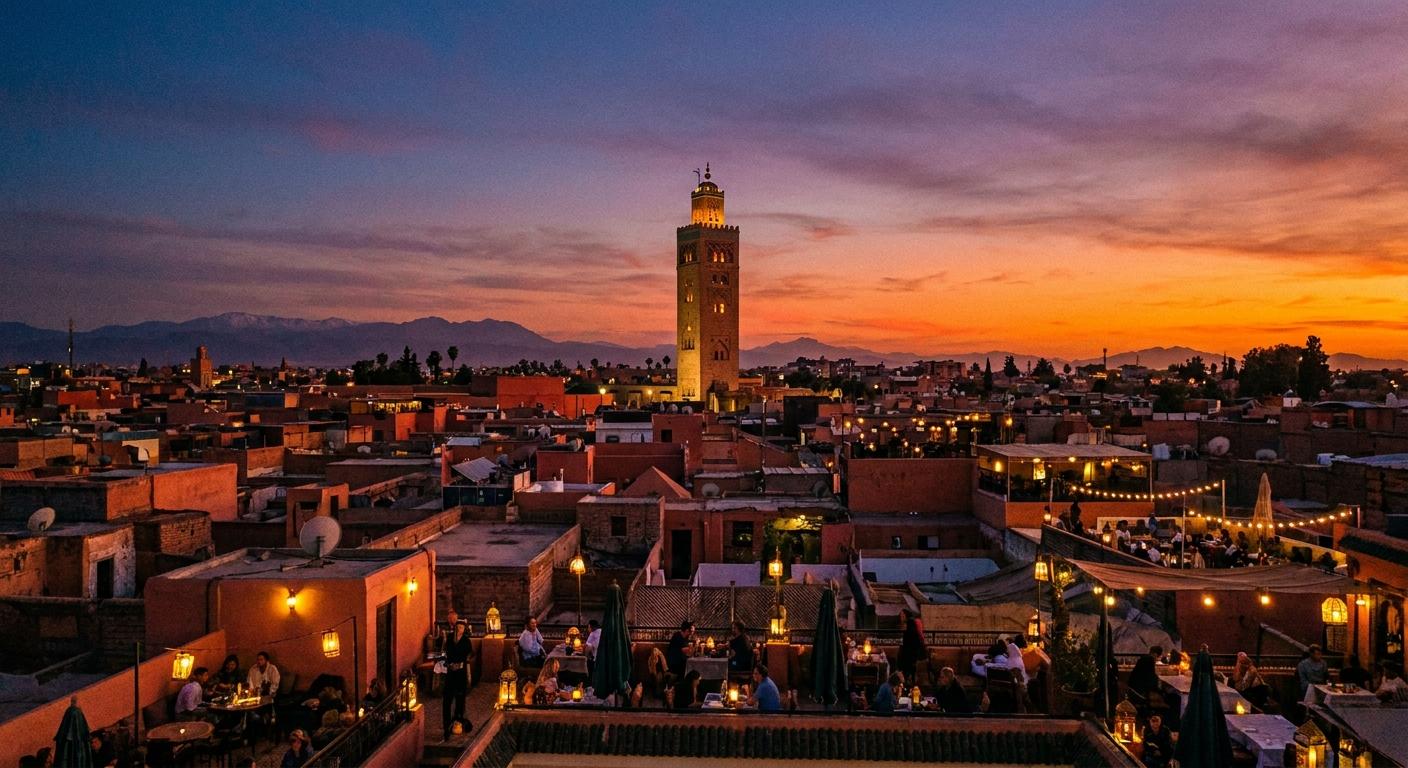
Marrakech is Morocco's most iconic destination — a sensory explosion of color, sound, and scent. The ancient medina, a UNESCO World Heritage Site, pulses around the legendary Jemaa el-Fna square, where storytellers, musicians, and food vendors create an open-air theatre that never closes. Beyond the chaos lies a city of extraordinary riches: palatial riads, lush gardens, world-class restaurants, and some of North Africa's finest artisanal crafts.
History
Founded in 1062 by the Almoravid sultan Yusuf ibn Tashfin, Marrakech served as the capital of a Berber empire stretching from Senegal to Spain. The city's name likely gives Morocco its name. It flourished under the Almohads (12th century), who built the Koutoubia Mosque, and again under the Saadian dynasty (16th century), whose ornate tombs still stand today. The Mellah (Jewish quarter) dates to 1558, making it one of the oldest in Morocco.
Culture & Traditions
The city is renowned for its living craft traditions: zellige tile-making, leatherwork in the tanneries, brass lantern forging, and intricate wood carving. The hammam ritual is central to daily life. Every Thursday evening, henna artists gather near the Bahia Palace. The Gnawa music tradition — rooted in sub-Saharan spiritual practices — remains alive in the medina's squares.
Must-See Sights
Jemaa el-Fna
The beating heart of the medina, most alive at dusk with food stalls, acrobats, and storytellers.
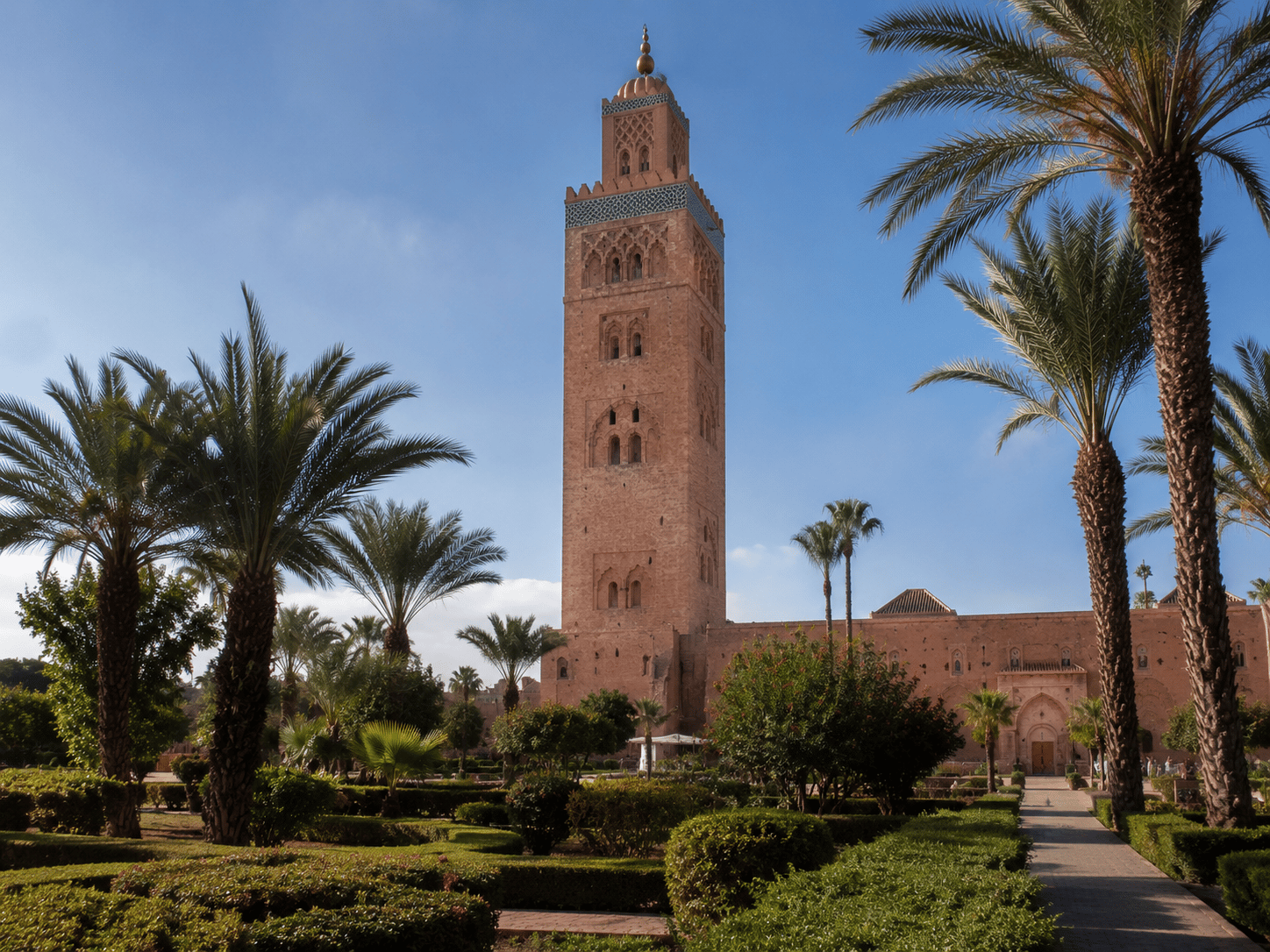
Koutoubia Mosque
The 12th-century minaret that defines the Marrakech skyline — visible from almost anywhere in the city.
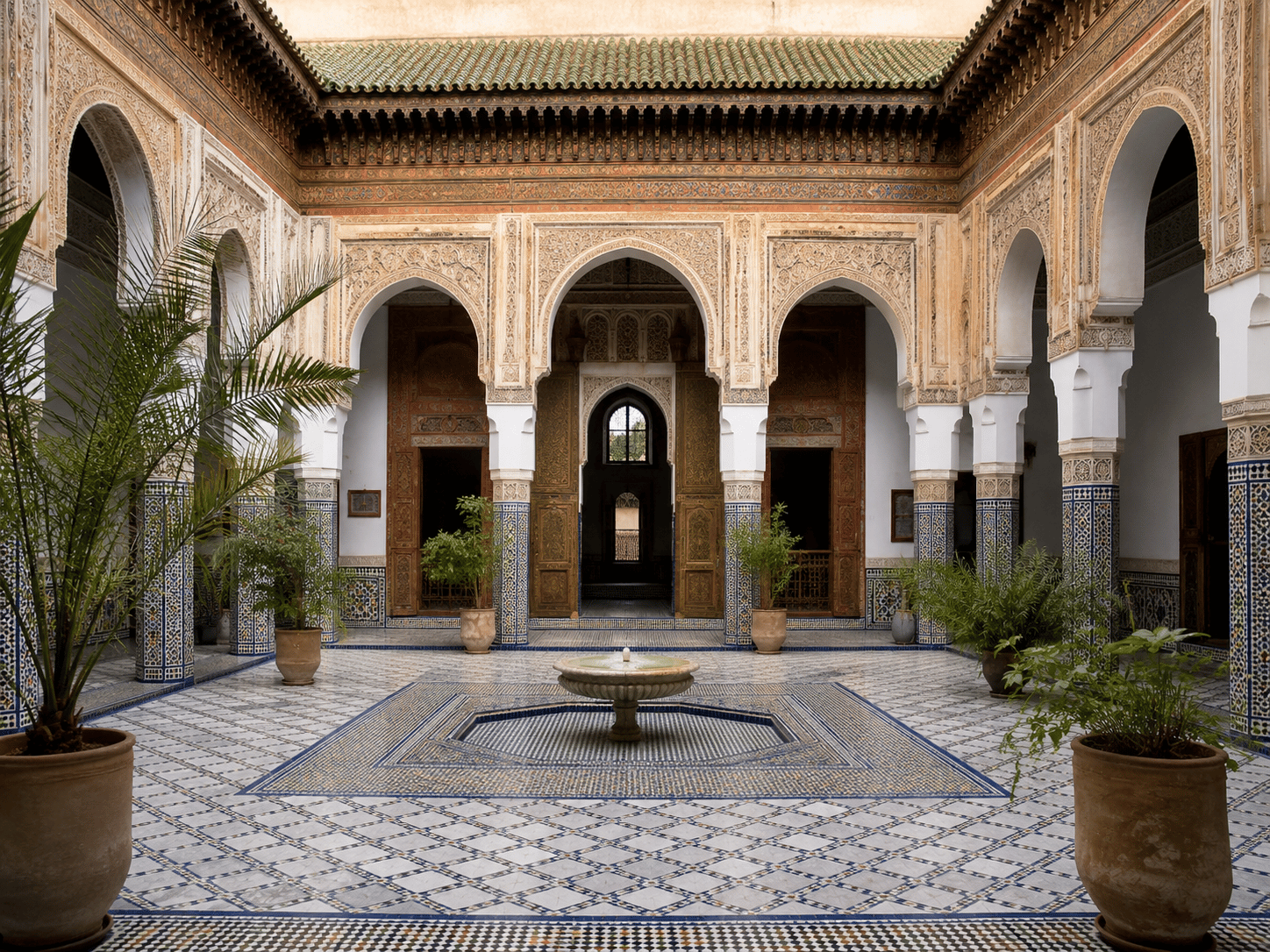
Bahia Palace
A 19th-century masterpiece of Moroccan craftsmanship with intricate stucco, cedar, and zellige.
Saadian Tombs
Hidden for centuries, these exquisite royal tombs were rediscovered in 1917.
Majorelle Garden
Yves Saint Laurent's electric-blue botanical sanctuary, home to the Berber Museum.
El Badi Palace
Sprawling 16th-century ruins once considered one of the world's most magnificent palaces.
Food & Drink
Pastilla
Flaky pigeon (or chicken) pie dusted with cinnamon and sugar — the city's signature dish.
Tangia Marrakchia
Slow-cooked lamb sealed in a clay urn and cooked overnight in the coals of a hammam furnace.
Harira
Rich tomato and lentil soup, traditionally served to break the Ramadan fast.
Mint tea
Poured from height to create froth — accepting three glasses is local etiquette.
Insider Tips
- ✓Avoid Jemaa el-Fna's snake charmers and monkey handlers — photos cost money and the animals are mistreated.
- ✓Hire a licensed guide for your first medina walk — the souks are intentionally labyrinthine.
- ✓Summer (June–August) is brutal: 40°C+ is common. Spring and autumn are ideal.
- ✓Agree on taxi prices before getting in — meters are rarely used.
- ✓Most riads require advance booking; walk-ins are rarely possible for quality places.
- ✓The medina gates (Babs) are excellent orientation landmarks.
Neighborhoods
Medina
Ancient, chaotic, unmissable — the real Marrakech.
Gueliz
Modern French-era district with good restaurants and galleries.
Mellah
The old Jewish quarter with crumbling beauty and local life.
Hivernage
Upscale hotel district, quiet and well-kept.
Getting There
Marrakech Menara Airport (RAK) receives direct flights from 50+ European cities. Trains connect to Casablanca (3h) and Rabat (4.5h). CTM buses link to most Moroccan cities.
Photos
Marrakech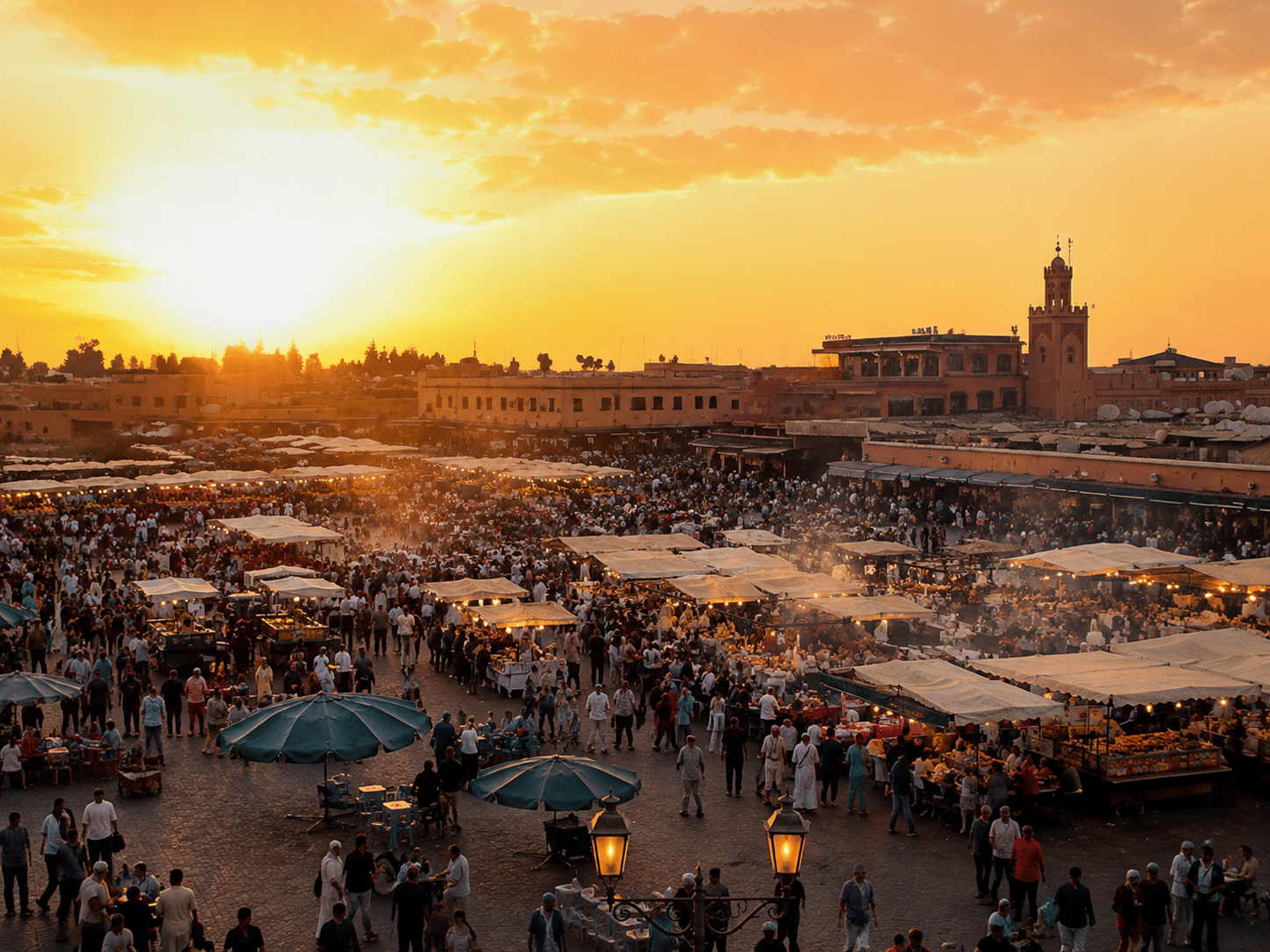 Jemaa el-Fna
 Mosquée Koutoubia
 Palais Bahia
Location
Marrakech, Marrakech-Safi
31.6295°N, 7.9811°W
Budget Guide / Day
Best Time to Visit